GLOBAL ACTION NETWORK
Sustainable Food from the Oceans and Inland Waters
for Food Security and Nutrition
Sustainable food from the oceans and inland waters plays a significant role for food security and nutrition.
This Global Action Network will mobilize actions to include aquatic foods (from the oceans and inland waters) as a key food source for achieving food security and improved nutrition in the Decade of Action on Nutrition (2016–2030) and in line with the UN Sustainable Development Goals (SDGs).
The Global Action Network will continue until 2030 – bridging the UN Decade of Action on Nutrition and the UN Decade of Ocean Science (2021–2030).
Network in Action
Events
Newsletters
Actions and Knowledge


Related Events
Global Forum for Food and Agriculture, 14-17 January, Berlin, Germany
World Seafood Congress, 9-11 February, Chennai, India
Cofi Sub-Committee on Fisheries Management, 23-27th February, Iceland
Our Ocean Conference 2026, Kenya
Ocean Decade Conference 2027, April 2027, Rio de Janeiro, Brazil
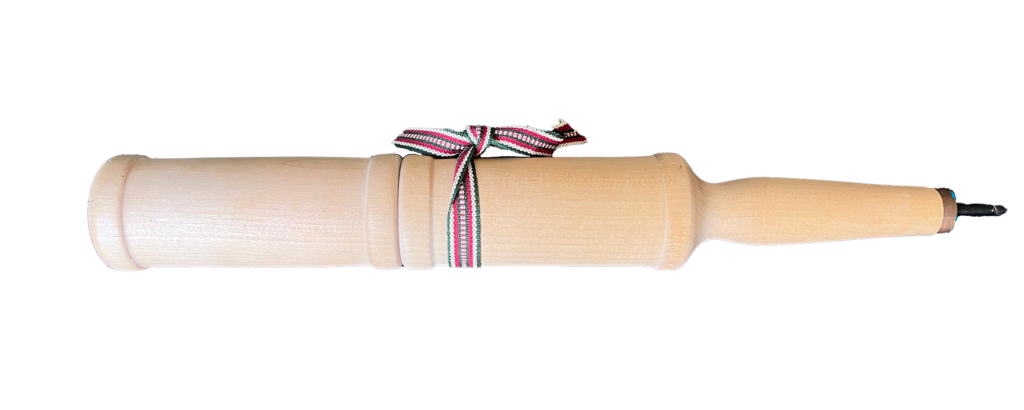
Budstikke
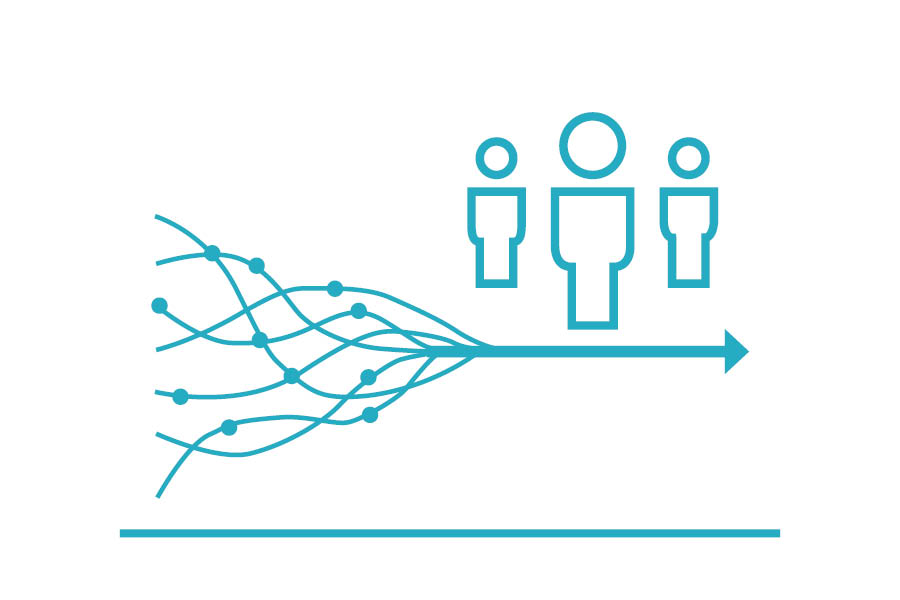
We adopt the budstikke as a symbol to carry key messages related to sustainable aquatic food systems for food security and nutrition — to encourage boundary-crossing between people with different knowledge and perspectives, and to call for actions from healthy waters to healthy people, emphasizing the inclusion of aquatic foods as a key for food security and nutrition.
9 June, 2025: UNOC2025 Mini Conference
International and regional cooperation is essential.
Science and evidence-based policy are fundamental to sustainable ocean governance and sustainable aquatic food systems.
Capacity building and inclusion are key to long-term sustainability.
The role of aquatic foods in nutrition and food security must be recognized and strengthened.
27 August, 2025: IUNS-ICN2025 Scientific Symposium
Nutritionists should be more visible in food system dialogues.
Food system transformation is a smart investment and requires bundled actions by multiple actors.
Efficient regulations, innovations and shift in mindset and social norms are also crucial.
School meals should follow climate-friendly dietary guidelines and be introduced gradually accompanied by a pedagogical concept.
Safe foods from the ocean with efficient monitoring system are important.
Increase in seafood consumption can promote both human health and sustainability.
29 September, 2025: 13th WIOMSA Scientific Symposium
Actively engage in partnerships and information sharing across countries to align strategies, harmonize data, and coordinate actions for greater collective impact.
Prioritize the collection, analysis, and application of reliable, locally relevant data to guide evidence-based decision-making and adaptive management.
Support training, mentorship, and long-term institutional development to ensure sustained technical and organizational capability.
Advocate for and embed aquatic foods within national and regional nutrition, food security, and climate strategies to enhance their visibility and impact.
Continue leveraging the EAF-Nansen Programme as a strategic mechanism to connect research, policy, and practice, fostering collaboration and shared learning across sectors.
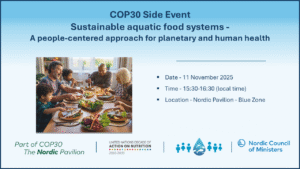
11th November, 2025: COP30 Side Event at the Nordic Pavillion
Aquatic foods are nutrient-rich, low footprint climate solution, core of a just and sustainable food system.
Fishers, aquaculture workers and traditional communities: protagonists and guardians of territorial knowledge, they must shape policy.
Cross-border and cross-sector cooperation builds resilient, low-emission and inclusive aquatic food systems.
Evidence-based, culturally adapted and accessible information and education turn aquatic foods into everyday healthy diets for all.
Reach children early, positive seafood experiences and mindset interventions in schools build lifelong healthy, sustainable habits.